AI Rarely Fails in the Code. It Usually Fails in the Culture.
Every week another AI strategy gets announced. Millions get invested. Yet the biggest obstacle to transformation isn't the technology — it's how naturally we protect the processes we already know.
Every week another AI startup launches. Every week another company announces its AI strategy. Millions get invested.
Yet the biggest obstacle to transformation often isn't the technology — it's how naturally we protect the processes we already know.
The Paradox Nobody Talks About
Here's something I keep noticing when advising organizations on transformation: everyone wants AI to automate the work that slows other people down. Far fewer of us are as eager to let it touch our own role.
That's not a character flaw. It's human. But it's also the exact hurdle most companies struggle to clear.
Startups move faster here — not because they have better tech, but because they don't yet have legacy workflows or politics to protect. They get to build clean.
Established companies are innovating too, but they're doing it while holding onto everything that made them stable in the first place. A much harder balancing act. That tension is why transformation stalls despite massive budgets. It's rarely a technology problem. It's a leadership opportunity.
The Orchestra Problem
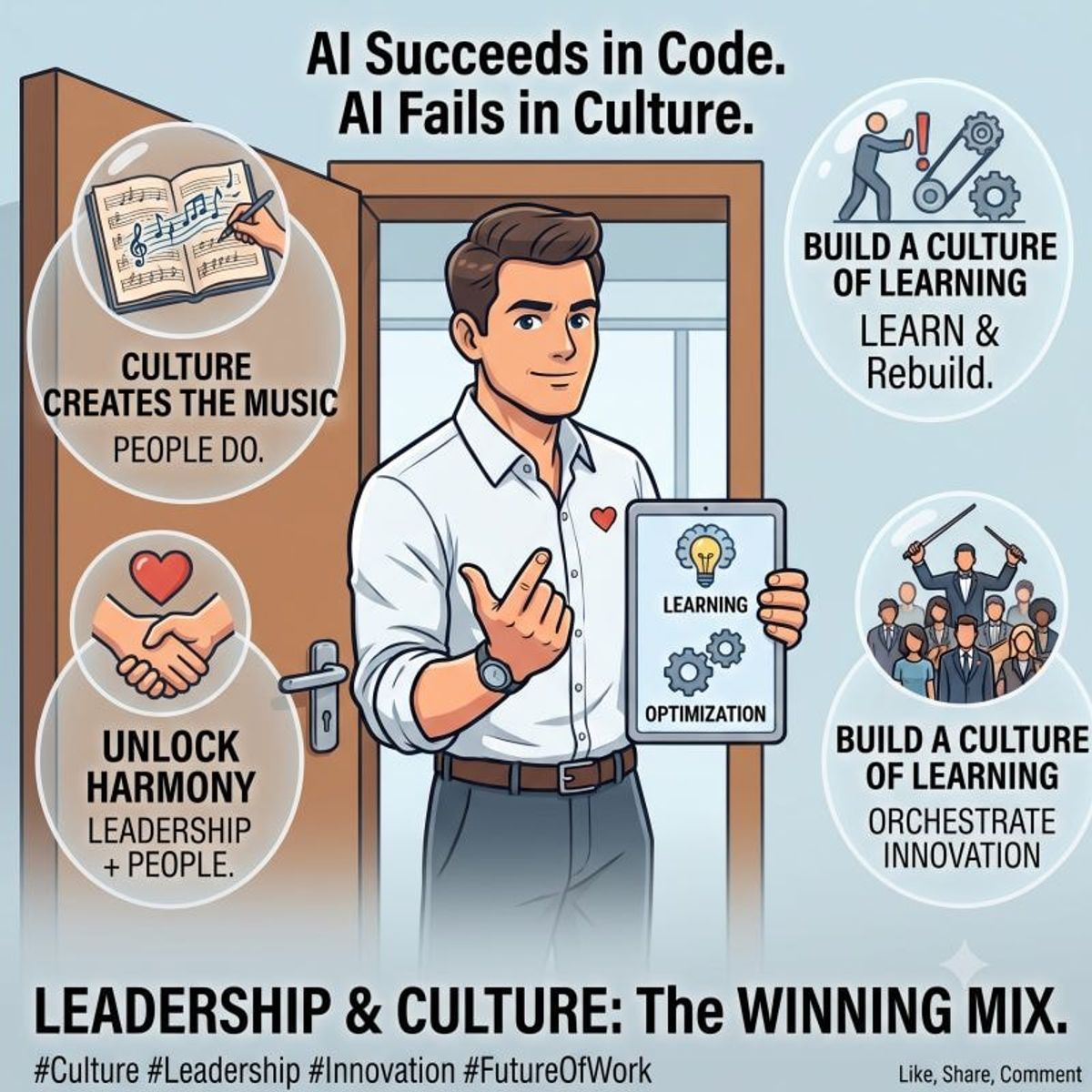
Picture a world-class orchestra handed the finest instruments ever made, then asked to keep playing last year's sheet music. The audience won't hear innovation. They'll hear the same song, just on better instruments.
That's where a lot of companies find themselves today. We ask AI to execute old work faster, when the real question is: what's quietly stopping us from creating something genuinely better for our customers?
Without that shift, AI just automates yesterday's process instead of unlocking tomorrow's advantage.
What Actually Separates the Winners
The companies that win won't necessarily have the most AI. They'll have leaders who build a culture of collective learning — where teams feel safe questioning old workflows and energized to rebuild them together.
Technology writes the notes. People create the music. Leadership helps the entire organization play in harmony.
A Question Worth Sitting With
Where are we protecting a workflow simply because it's familiar? And what could we build if we finally let it go?
The answer to that question is worth more than any AI budget line.
Explore Topics
Written by
Suman | humAIne
Content creator and writer sharing insights and stories.